Battery swapping stations: organise e-bike battery exchange and charging
Planning an e-bike battery swapping station? Prepare your battery fleet: compatibility, charging, access and availability. SafyPower offers charging lockers for removable batteries; their role in an exchange-based operation is defined with your team.
Battery swapping: exchange a battery, organise its charging
Battery swapping means replacing a depleted battery with a charged one compatible with the vehicle. It relies on a suitable battery stock and an operation that prepares batteries for their next use.
A swapping station and a charging locker serve different functions. SafyPower centralises removable battery charging in individual compartments. Shared stock management, battery allocation and exchange processes must be defined in the project; automatic battery exchange is not a feature claimed here.
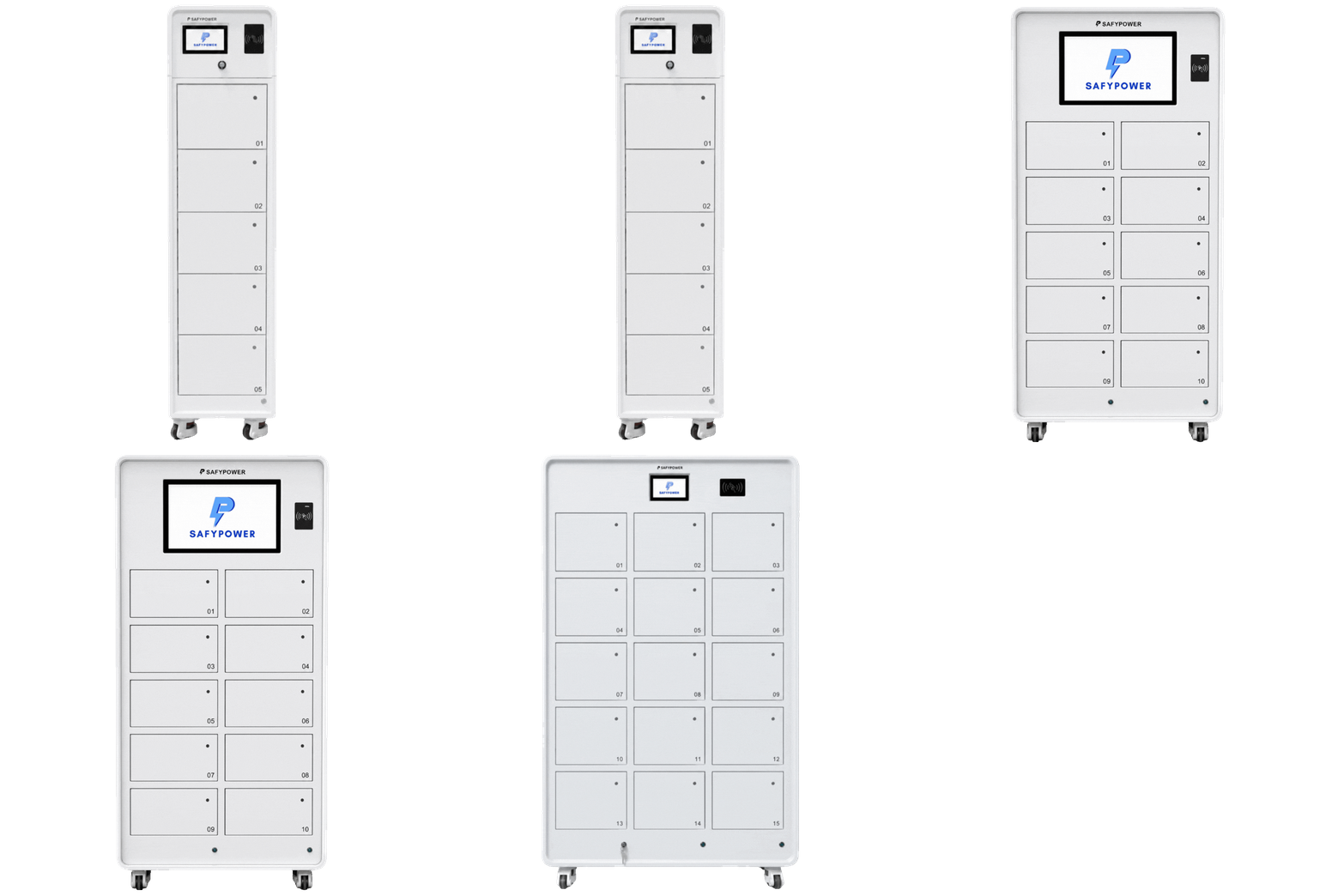
Find your ideal locker
in 30 seconds
Charging lockers for your battery fleet
A removable battery is placed with its charger in an individual compartment. The locker holds the battery, not the whole vehicle. Check battery and charger dimensions before selecting a configuration.
For exchange-based operations, the operator must also organise identification, vehicle allocation and availability checks. These arrangements are separate from simply plugging in a battery.
Delivery depot, fleet room or mobility area: assess flows, access and power supply. See our delivery and logistics page for delivery-bike operations.

Key decisions for your swapping project
Check compatibility
Identify battery models, vehicles and chargers. An interchangeable battery must be compatible with the equipment receiving it.
Plan availability
Size battery stock and charging times around usage, returns and planned departures.
Organise exchanges
Define access, battery allocation, checks and monitoring responsibilities before commissioning.
From a swapping station project to daily operations
01
Usage
Define who leaves and collects batteries and how each item is identified.
02
Safety
Compartment-based, monitored charging coordinated by SafyCore™, with site-specific guidance.
03
Organisation
Plan stock around your activity and manufacturers’ charging times.
04
Assessment
Validate compatibility and operations before selecting a charging solution.

Size charging capacity and battery stock together
How many vehicles operate? Are batteries truly interchangeable? How many return depleted at once? How many must be available for the next departures? These questions shape a swapping station project.
SafyPower configurations of 5, 10 or 15 lockers size the charging function for batteries and space. They do not by themselves determine the stock needed or guarantee a charged battery is available.
The assessment brings together charging times, usage patterns, compatibility and exchange operations. Involve fleet, operations and technical teams.
Prepare your battery exchange project
Battery swapping and charging: your questions
What is a battery swapping station?
It lets users exchange a depleted battery for a charged compatible one. It relies on battery stock, an exchange process and organised charging.
How does swapping differ from a charging locker?
Swapping replaces one battery with another. A charging locker holds a battery and charger during charging. SafyPower offers this charging function; exchange-based operations must be defined in the project.
Are all e-bike batteries interchangeable?
No. Check vehicle and charger compatibility for each model, as well as battery and charger dimensions for the lockers.
How do you size a fleet battery-swapping project?
Identify vehicles, compatible batteries, charging times and return and departure patterns. Assess lockers and battery stock together: a charging space alone does not guarantee a charged battery is available.
Let’s assess charging for your battery fleet
Looking for a swapping station or planning battery exchanges for a fleet? To assess your needs, tell us:
- Vehicle, battery and charger models
- Vehicle numbers and expected exchanges
- Charging times, usage patterns and proposed site