Battery charging for delivery bikes and logistics
Organise battery charging for electric delivery bikes at your site. SafyPower brings removable batteries and their chargers together in individual lockers near your dispatch area or bike room.
Organise charging between delivery rounds
E-bikes support delivery rounds and logistics operations. On returning to site, batteries need a defined location for charging and preparation for their next use.
A delivery bike battery charging station brings connections together and clarifies access rules. Teams have one charging point integrated into depot operations instead of chargers scattered around work areas.
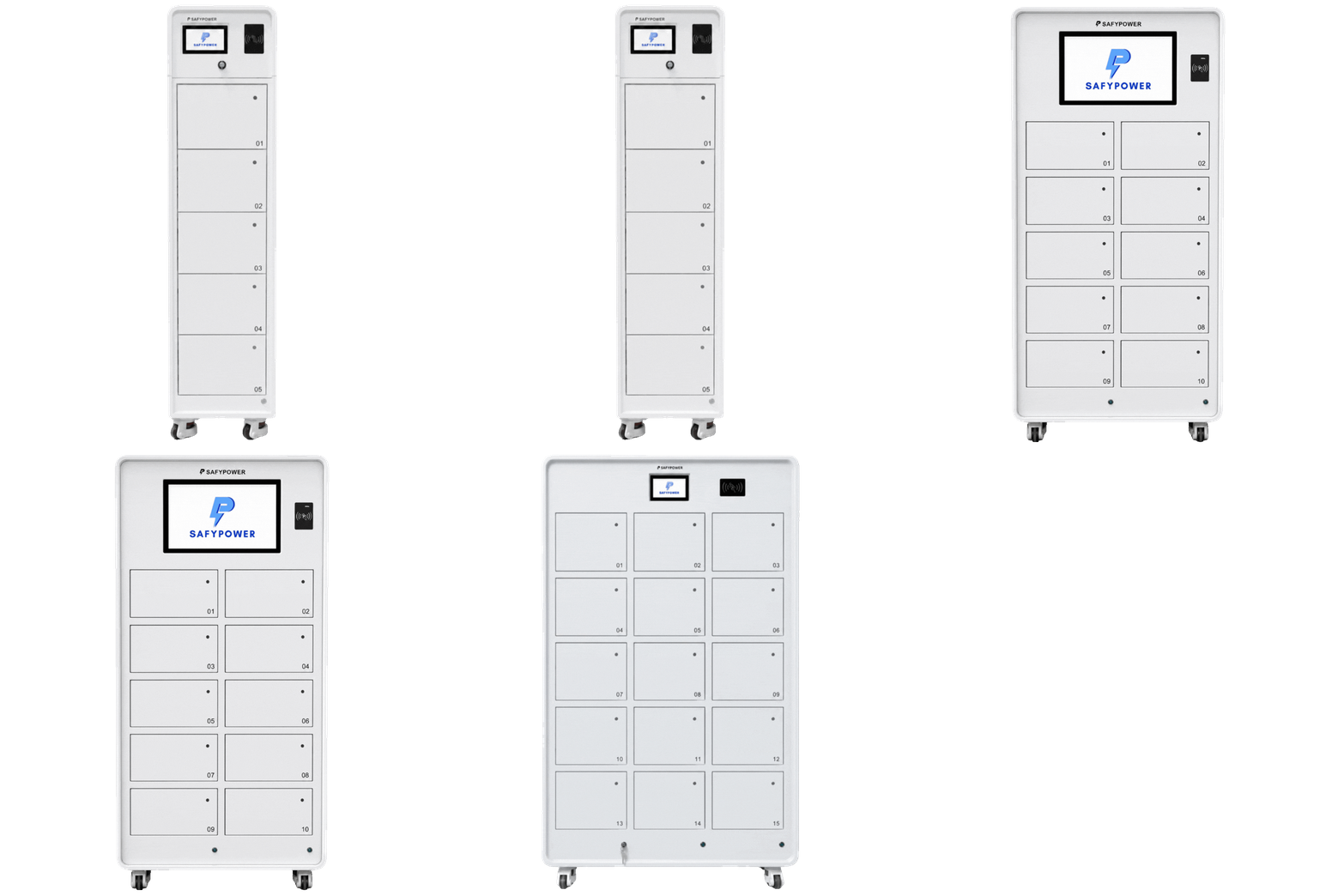
Find your ideal locker
in 30 seconds
An individual locker for each removable battery
Each user places their removable battery and charger in an individual compartment. The locker holds the battery, not the cargo bike or whole bicycle.
This separates vehicle parking from charging and helps identify equipment between rounds.
Depot, bike room or preparation area: the location is assessed against traffic flows, access and power supply. Battery and charger compatibility with the compartments must be checked before choosing the configuration.
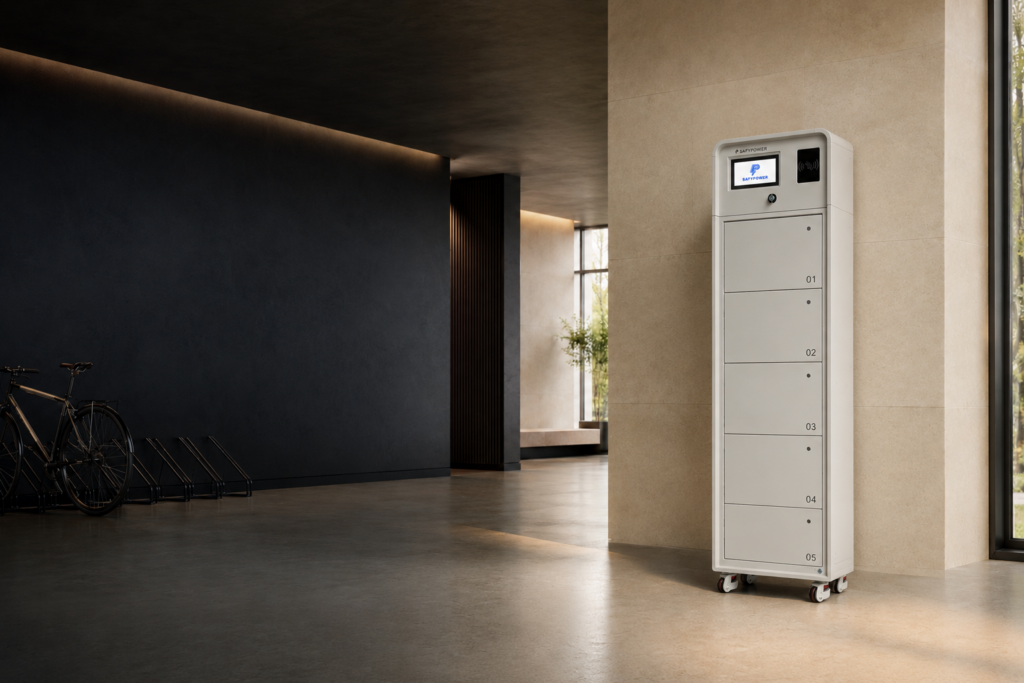
Equipment for riders and fleet managers
Organise battery charging
Bring batteries and chargers into an identified space with guidance suited to your operations.
Support cycle logistics
Integrate charging into the work of teams using e-bikes for deliveries.
Simplify management
Define access, locker allocation and responsibilities for monitoring and maintenance at the depot.
Charging integrated into depot operations
01
Simplicity
A clear process to leave a battery, connect its charger and collect equipment before the next round.
02
Safety
A compartment-based, monitored approach coordinated by SafyCore™ technology.
03
Responsibility
Infrastructure supporting e-bikes in delivery and logistics operations.
04
High standards
A configuration assessed with your teams against site constraints and usage patterns.

Install a station with 5, 10 or 15 lockers
How many bikes return to the depot? How many batteries need charging simultaneously? Are batteries shared or assigned? These practices guide station sizing.
Configurations of 5, 10 or 15 lockers match battery numbers and available space. The station does not replace route planning or checking manufacturers’ charging times.
The assessment defines location, access, power and guidance. Involve fleet, operations and safety managers to fit the equipment into depot flows.
Equip your depot with a dedicated charging area
Delivery bike charging: your questions
Why provide charging for a delivery-bike fleet?
A dedicated point groups batteries and chargers when riders return. It helps organise access, identify equipment and share depot instructions. Capacity must reflect simultaneous charging needs.
Are cargo-bike batteries compatible?
Compatibility depends on battery and charger dimensions and compartment specifications. Check the fleet’s models during the assessment. The station does not hold the whole cargo bike.
Who should help plan depot installation?
Fleet, operations, technical and safety teams can jointly define location, access, power supply and instructions.
How does charging fit delivery rounds?
Define authorised users, locker allocation and battery drop-off and collection times. Equipment charging times must be incorporated into operations.
Request an assessment for your charging station
Equipping a depot, bike room or several platforms? To prepare our discussion, tell us:
- Site type and location
- Battery models and simultaneous charging needs
- Delivery schedules and preferred timeline